Stitch Without the Strain: A Real Talk Guide to Protecting Your Hands, Wrists, and Shoulders
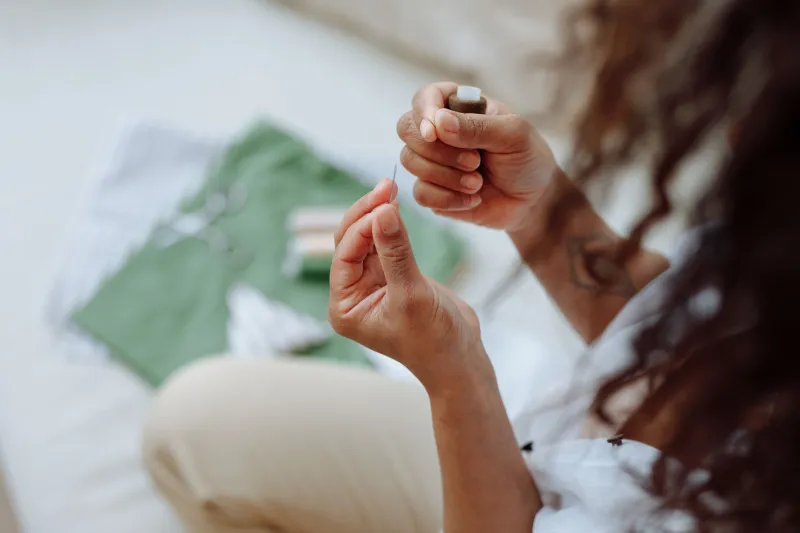
Let's be honest: nobody picks up a needle and thread thinking about tendinitis. You start embroidering because it's creative, calming, and genuinely satisfying. But ask any long-time stitcher about their body, and you'll likely hear a familiar story — the wrist that started aching after a long weekend project, the shoulder that locked up during a commission crunch, the fingers that went weirdly numb somewhere around hour three of a detailed floral fill.
These aren't rare horror stories. They're surprisingly common, and they're almost never talked about in embroidery circles. We share our color palettes and our favorite stabilizers, but we don't often talk about the physical cost of doing what we love. That ends here.
This guide is for every embroiderer who wants to keep stitching for decades — not just seasons.
Why Embroidery Is Harder on Your Body Than You Think
Embroidery looks gentle. You're sitting down, making small movements, working with delicate materials. How bad could it be?
Pretty bad, actually — and it's precisely because the movements are small and repetitive that the risk is so sneaky. When you embroider, you're performing the same micro-motions thousands of times per session: pulling thread through fabric, gripping a needle, rotating your wrist, tensioning the thread. Your muscles and tendons don't get a chance to recover between those repetitions, which is exactly the recipe for repetitive strain injury (RSI).
The most common issues embroiderers deal with include:
- Carpal tunnel syndrome — compression of the median nerve in the wrist, causing numbness, tingling, and weakness in the hand
- Tendinitis — inflammation of the tendons in the wrist, elbow, or shoulder from overuse
- De Quervain's tenosynovitis — a specific type of tendinitis affecting the thumb side of the wrist, very common in stitchers
- Trigger finger — when a finger gets stuck in a bent position due to tendon irritation
- Neck and upper back tension — from hunching over a hoop for extended periods
- Eye strain — which often causes compensatory posture shifts that make everything else worse
None of these are inevitable. But they do require some intention to avoid.
Set Up Your Space Like You Mean It
The single biggest thing most embroiderers can do for their bodies is rethink their physical setup. Most of us just plop down on the couch with our hoop in our lap, and while that's cozy, it's also a fast track to neck and shoulder problems.
Chair and seating: If you stitch for more than 30 minutes at a time, you want a chair that supports your lower back and lets your feet rest flat on the floor. Your hips should be at roughly a 90-degree angle. Slouching on a soft couch pulls your whole spine out of alignment and puts extra load on your neck and shoulders as you lean forward to see your work.
Hoop height: Ideally, your embroidery hoop should be positioned so you're not craning your neck down to see it. A lap stand or floor stand is a game-changer for a lot of stitchers — it holds your hoop at a comfortable angle without you having to grip it for hours. Your local craft store or Amazon will have options ranging from basic to adjustable floor models.
Lighting: Poor lighting makes you lean in closer, which strains your neck and changes your arm position. A good daylight LED lamp positioned to illuminate your work without glare reduces eye strain and helps you maintain a more neutral posture.
Take your glasses seriously: If you wear readers or have a prescription you've been ignoring, this is your sign to update it. Squinting at tiny stitches is a posture disaster.
The Stretches That Actually Help
You don't need a physical therapist to do right by your body — though if you're already in pain, please see one. For prevention, a handful of targeted stretches can make a real difference.
Do these before you start stitching, after every 30–45 minutes, and when you wrap up for the day:
Wrist flexor stretch: Extend one arm in front of you, palm facing up. Use your other hand to gently pull your fingers back toward your body until you feel a stretch in your forearm. Hold for 20–30 seconds. Switch sides.
Wrist extensor stretch: Same position, but this time your palm faces down and you pull your fingers toward the floor. This targets the muscles on top of your forearm that get tight from gripping.
Thumb stretch: Gently pull your thumb across your palm toward your pinky. Hold for 15–20 seconds. This one is specifically useful for De Quervain's prevention.
Neck rolls: Slowly drop your ear toward your shoulder and hold for 10 seconds, then switch. Follow with gentle chin-to-chest stretches. Never roll your head all the way back — that compresses the cervical spine.
Shoulder blade squeeze: Sit up straight and squeeze your shoulder blades together like you're trying to hold a pencil between them. Hold for 5 seconds, release. Repeat 10 times. This counters the forward-hunching posture that embroidery encourages.
Finger fans: Spread your fingers as wide as possible, hold for 5 seconds, then close your hand into a fist. Repeat 10 times. Simple, but surprisingly effective for keeping finger tendons happy.
The Break Rule Nobody Follows (But Should)
Here's the uncomfortable truth: the most effective injury prevention strategy is also the least popular one. You have to stop stitching.
Not forever. Just regularly.
The general recommendation from occupational therapists for repetitive hand tasks is a 5–10 minute break every 45–60 minutes. During that break, you should actually get up and move — walk to the kitchen, do your stretches, shake out your hands. Sitting still and scrolling your phone doesn't count.
If you're deep in a project and breaks feel impossible, try the Pomodoro method: set a timer for 45 minutes of focused stitching, then a mandatory 10-minute break. It feels counterintuitive at first, but most stitchers find they actually get more done because their focus stays sharper.
When to Stop and Get Help
Prevention is the goal, but sometimes pain shows up anyway. Knowing when to take it seriously matters.
See a doctor or physical therapist if:
- You have numbness or tingling that doesn't go away after rest
- Pain wakes you up at night
- You've had symptoms for more than two weeks despite rest
- You notice weakness in your grip or difficulty holding a needle
Ignoring these signs and stitching through the pain is how a manageable strain becomes a months-long recovery. Early intervention is almost always faster and less disruptive than waiting it out.
Think of It as Craft Maintenance
We spend a lot of time maintaining our tools — conditioning our hoops, organizing our floss, pressing our fabric. Our bodies deserve the same care. The stretches, the breaks, the ergonomic setup — none of it is complicated or expensive, and all of it adds up to years more of doing something you love.
Embroidery is a long game. Play it like one.


