What Your Closet Is Already Telling You: A Maker's Guide to Finding Embroidery Inspiration at Home
Here's a truth most embroidery content won't tell you: you don't need a new wardrobe to build a better one. The answer might already be crammed between your winter coats and that denim jacket you keep meaning to wear more. Your closet, messy and imperfect as it is, holds more embroidery inspiration than any Pinterest board — you just have to know how to look at it.
This isn't about Marie Kondo-ing your life. It's about slowing down, getting honest with your stuff, and figuring out exactly where a needle and thread can do the most good.
Pull Everything Out (Yes, Everything)
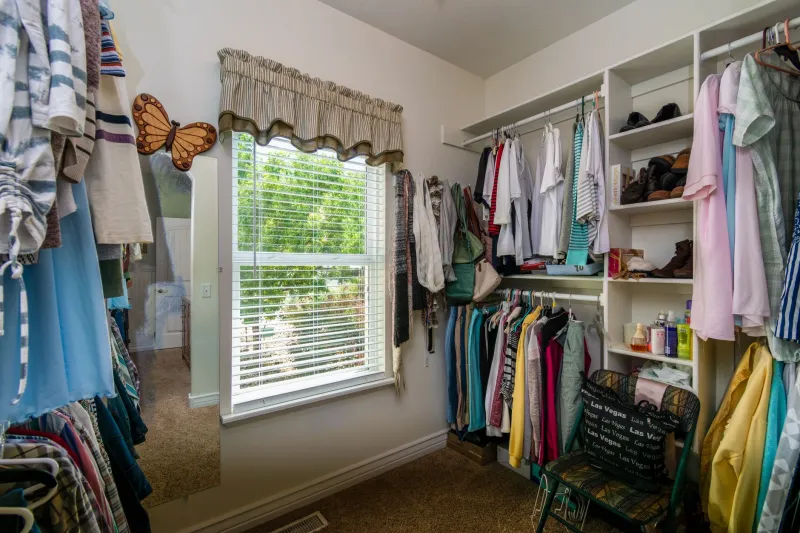
The first step sounds dramatic, but it works: take every wearable item out of your closet and lay it somewhere you can actually see it. The floor, the bed, a big couch — whatever you've got. The goal isn't chaos for chaos's sake. It's visibility.
When clothes live folded in drawers or shoved on hangers, they become invisible. You stop seeing them as individual pieces and start treating them as background noise. Pulling everything out forces you to confront what you actually own and, more importantly, what you're not wearing.
As you go through the pile, sort things into three rough groups:
- Pieces you reach for constantly
- Things you like but rarely wear
- Items you keep "just in case"
That middle category? That's where embroidery lives.
Look for the Repeats — They're Telling You Something
Once everything is out, scan for patterns in your color choices. Do you own six navy blue pieces? Three different olive green tops? A suspiciously large collection of white linen? Most people don't notice their own color habits until they see them all laid out at once.
Those repeating colors aren't a problem — they're a map. They tell you what palette you're naturally drawn to, which is incredibly useful information when you're planning embroidery. If you already gravitate toward earthy neutrals, a botanical embroidery design in rust, sage, and cream is going to feel like you. You're not guessing at what you'll love. Your closet already knows.
Take notes. Seriously — grab your phone and jot down the colors you keep seeing. This becomes your personal palette, and it's more reliable than any color trend forecast because it's based on actual choices you've already made.
Identify the Gap Pieces
Now look at the "like but rarely wear" pile. Ask yourself why each piece gets skipped. The answers are usually one of a few things:
- It's plain in a way that feels boring
- It doesn't quite match anything else you own
- It fits fine but feels kind of... forgettable
- It has a small flaw or wear spot you've been ignoring
All four of those are embroidery problems with embroidery solutions.
A plain white Oxford shirt that never gets worn isn't a lost cause — it's a blank canvas. A denim jacket that doesn't match your newer pieces might just need a design element that ties it back into your current color story. That slightly worn collar on your favorite chambray top? A strategic floral border can redirect the eye entirely.
This is the part where embroidery stops being a hobby and starts being a wardrobe strategy.
The "Worth Stitching" Test
Not every piece should get the embroidery treatment — and deciding which ones do is part of the process. Here's a simple framework to help you prioritize:
Fabric quality: Is the base material worth the time investment? A well-made cotton twill or sturdy canvas denim will hold stitches beautifully for years. A flimsy poly-blend might not. If the garment itself isn't going to last, neither will your work.
Wearability: Would you wear this piece regularly if it looked better? If the honest answer is no — maybe it's the wrong silhouette or you just don't love the style — embroidery probably won't save it. But if the only thing holding you back is that it feels plain or disconnected from your other clothes, that's fixable.
Emotional value: Sometimes a piece is worth stitching simply because it matters. An old college sweatshirt, a vintage find you scored at a thrift market in Brooklyn, a jacket that belonged to someone you loved — these aren't always the most practical candidates, but they're often the most meaningful projects you'll ever make.
Placement potential: Look at the actual surface of the garment. Is there a natural focal point — a chest pocket, a collar, a cuff, a back yoke — where a design would sit well? Pieces with interesting structural details often have obvious embroidery real estate built right in.
Map Out Your Design Direction
Once you've identified your candidates, spend a few minutes with each piece and think about what kind of design would actually make you reach for it more. This is where your earlier color notes come in handy.
If your closet skews minimal and neutral, you probably don't want to cover a jacket in a maximalist wildflower explosion (though hey, if that's your thing, go for it). A single well-placed motif — a small bird on a collar, a geometric border on a cuff — might do exactly what you need without overwhelming the piece.
If your wardrobe is already expressive and colorful, you have more room to play. A bold back panel design on a thrifted denim jacket, a full floral sleeve on a plain white shirt — these kinds of statements make sense when the rest of your closet has that same energy.
The goal is cohesion. You're not decorating individual pieces in isolation; you're building a wardrobe that feels intentional.
Make a Simple Project List
Before you put everything back, write down your top three to five embroidery candidates in order of priority. Include a note about what you're thinking for each one — even just a phrase like "small floral on the left chest" or "geometric border along the hem" is enough to get you started.
This list becomes your project queue. Instead of feeling overwhelmed by possibility or buying new fabric you don't need, you've got a focused, personal roadmap built entirely from things you already own.
And honestly? That's one of the most satisfying parts of this whole process. You didn't need to buy anything. You just needed to look.
The Bigger Picture
Doing a closet audit before you stitch isn't just practical — it changes how you think about embroidery altogether. Instead of treating it as a standalone craft, you start seeing it as a living part of how you dress and express yourself. Every piece you transform is a small act of intention: choosing to keep something, invest in it, and make it yours in a way that no store-bought item ever could be.
So before you open another pattern shop or scroll through another reel of someone else's finished hoops, spend twenty minutes with your own wardrobe. It's already full of your next best project.