Don't Let Your Best Work Gather Dust: A Complete Storage Guide for Finished Embroidery Pieces
Let's be honest for a second. You probably have a finished embroidery piece — maybe a beautifully stitched denim jacket, a framed floral hoop, or a hand-embroidered tote — sitting somewhere it absolutely shouldn't be. Folded under a pile of fabric scraps. Hung in a closet with zero protection. Shoved into a plastic bin because you ran out of shelf space.
We get it. The thrill of finishing a piece is real, and figuring out where it lives next feels way less exciting than starting the next project. But here's the thing: improper storage is quietly destroying the work you've poured yourself into. Fading threads, crushed dimensional stitches, moisture damage, and mystery stains don't care how many hours you logged on that piece. They'll ruin it anyway.
So let's fix that. Here's a practical, no-fuss guide to giving your finished embroidery the storage setup it actually deserves.
Why Finished Embroidery Is More Fragile Than You Think
Embroidery threads — especially those made from cotton, silk, or wool — are genuinely sensitive to their environment. UV light causes colors to fade faster than you'd expect, even indirectly through a window. Humidity encourages mold and mildew, especially in pieces stored in basements or bathrooms. And compression? That's the enemy of raised stitches, French knots, and any dimensional work you've done. Flatten those out under a stack of sweaters and you may never get them back.
Garments with embroidery have an extra layer of complexity because the fabric and the thread respond to environmental conditions differently. That tension between materials is what makes storage for embroidered clothing a little more nuanced than just hanging it up and calling it done.
The Right Way to Store Embroidered Garments
Fold with intention, not convenience. If you're folding an embroidered piece — say, a sweatshirt or a pair of jeans — avoid folding directly on top of the stitched area. Instead, fold the garment so the embroidery faces outward and sits on top of the fold, not underneath it. For extra protection, lay a piece of acid-free tissue paper over the embroidered section before folding. This keeps fibers from pressing against each other and prevents color transfer between threads.
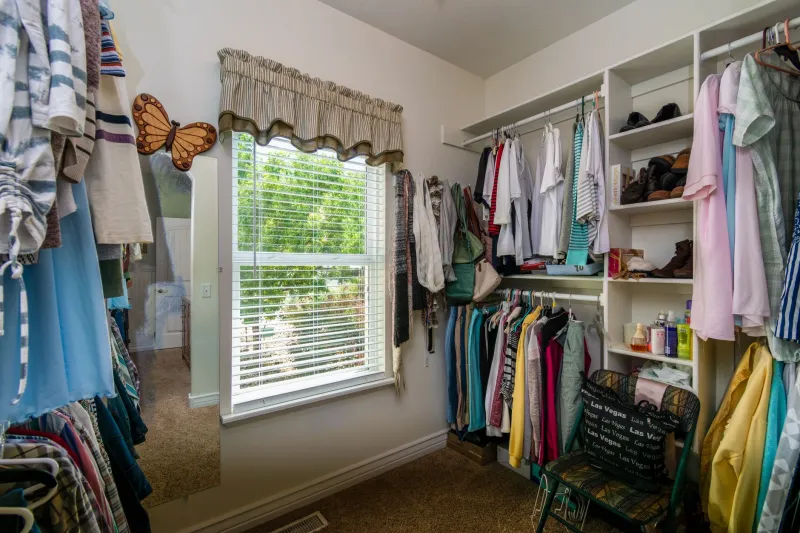
Hang heavier pieces carefully. Embroidered jackets and coats do better on hangers than folded in a drawer, but the hanger matters. Padded hangers distribute weight more evenly and reduce stress on the fabric. Avoid wire hangers entirely — they distort shoulders over time and can snag threads if the garment shifts. If you're storing something long-term, a breathable garment bag (cotton or muslin, never plastic) keeps dust off while letting the fabric breathe.
Give dimensional work room to breathe. French knots, bullion stitches, padded satin stitch — any raised embroidery technique needs space. Don't stack items directly on top of pieces with dimensional work. If shelf storage is your only option, place these items on top of the pile, never at the bottom.
Archival Storage for Hoop Art and Framed Pieces
If you've finished a piece that lives in a hoop or frame rather than on a garment, the rules shift a little. The biggest risks here are UV exposure, humidity, and dust.
Frame with UV-protective glass. If you're framing a finished hoop piece for display, invest in UV-filtering glass or acrylic. It makes a visible difference over time, especially for pieces displayed near windows or in well-lit rooms. Standard glass lets UV rays through and will gradually bleach your thread colors — sometimes unevenly, which looks worse than uniform fading.
Use acid-free backing materials. When mounting embroidery for framing, the materials behind your work matter as much as what's in front of it. Acidic backing boards yellow over time and can transfer that discoloration to your fabric. Acid-free foam board or mat board is widely available at US craft stores like Michaels or online through archival suppliers like Gaylord Archival.
Store unframed hoops flat, not stacked. If you have finished hoops waiting to be gifted or displayed, resist the urge to stack them. Even lightweight hoops pressing against each other can distort the fabric over time. Store them upright in a box with dividers, or hang them individually on a wall or pegboard.
Climate and Environment: The Details Most People Skip
You don't need a museum-grade climate control system, but a few basic environmental adjustments go a long way.
Aim for stable humidity. The sweet spot for textile storage is roughly 45–55% relative humidity. Too dry and fibers become brittle; too humid and you're inviting mold. If your storage area tends toward dampness — a basement, a closet on an exterior wall — a small dehumidifier or silica gel packets in your storage bins can help. Just check and replace the silica gel regularly.
Keep things dark when not on display. Light — even ambient indoor light — degrades thread color over time. Pieces stored in opaque bins, drawers, or garment bags will hold their color longer than pieces left out in the open. If you love displaying your work (which, fair), rotate pieces seasonally so no single item gets prolonged light exposure.
Avoid attics and garages. These spaces experience extreme temperature swings that are genuinely hard on textiles. A climate-controlled closet inside your home is always the better option.
Creative Display That Doubles as Protection
Here's the good news: displaying your embroidery properly is one of the best ways to protect it, as long as you're thoughtful about placement. A well-hung piece on a wall away from direct sunlight, in a stable indoor environment, with UV-protective glazing is in better shape than the same piece crumpled in a box.
Consider building a small rotating gallery wall in your workspace or a low-traffic room. Swap pieces in and out every few months. It keeps your collection feeling fresh, limits light exposure for any single piece, and honestly? It's motivating to see your own work displayed like it matters — because it does.
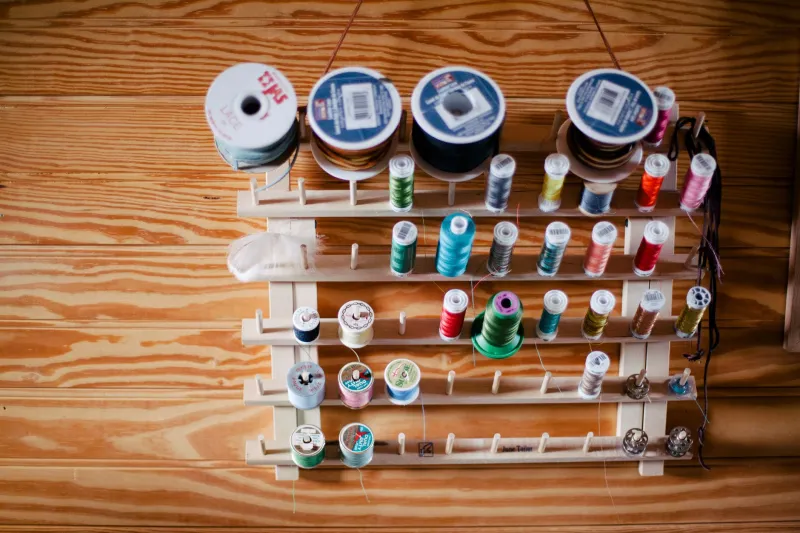
Pegboards are another underrated option for makers who want to keep finished hoops accessible without stacking or stuffing them. A simple pegboard setup in a craft room lets you display and organize at the same time.
Building an Organizational System That Actually Sticks
If you're a prolific maker, you probably have more finished pieces than you realize. Before you overhaul your storage setup, do a quick audit: pull everything out, assess the condition of each piece, and decide what's display-worthy, what needs repair, and what you're actually keeping versus gifting or selling.
From there, a simple labeling system saves a lot of future headaches. Clear bins with handwritten or printed labels — sorted by type (garments, hoops, flat pieces), by recipient (gifts in progress), or by project series — make it easy to find what you need without pawing through everything.
For your most precious or sentimental pieces, consider a dedicated archival box. Flat, acid-free storage boxes designed for textiles are available through archival suppliers and even some quilt shops. Line them with acid-free tissue, lay pieces flat, and store them somewhere stable. It's a small investment that protects work you genuinely can't replace.
Your stitches hold hours of your time, your creative energy, and often a piece of your heart. They deserve more than a random drawer or a forgotten corner of a closet. A little intentional storage goes a long way — and it means your best work will still look like your best work years from now.