Borrow Like a Pro: What Embroiderers Can Steal From Cross-Stitch and Needlepoint (And Vice Versa)
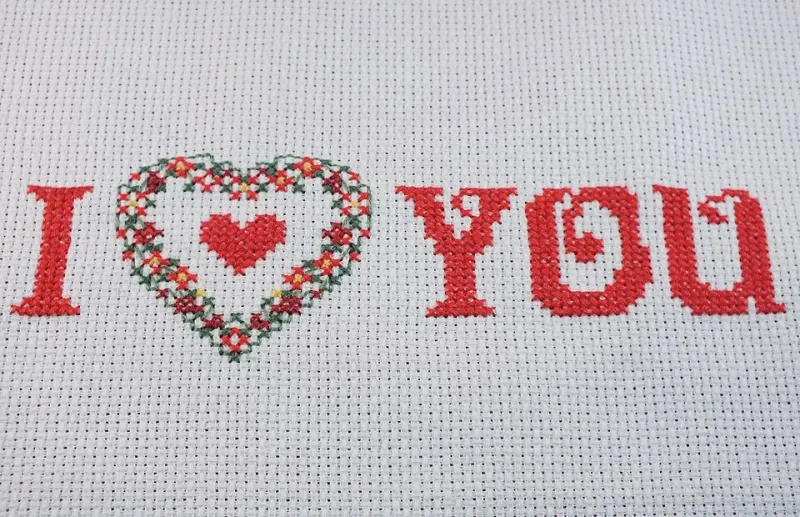
Photo: Yiota S Xstitch, CC BY 3.0, via Wikimedia Commons
Borrow Like a Pro: What Embroiderers Can Steal From Cross-Stitich and Needlepoint (And Vice Versa)
If you've ever stood in the needlework aisle at your local Joann or Michael's and felt a little confused about where embroidery ends and cross-stitch begins, you're not alone. These three disciplines — embroidery, cross-stitch, and needlepoint — are often shelved together, taught separately, and treated like totally distinct hobbies. But here's the thing: the overlap between them is enormous, and the stitchers who figure that out early? They tend to do really interesting work.
Think of it like cooking. A baker who learns a few knife skills from a savory chef isn't suddenly a different kind of baker — they're just a more capable one. Same deal here. Borrowing techniques across needlework disciplines doesn't dilute your craft. It expands it.
Let's break down what each tradition does exceptionally well, and how you can start pulling those strengths into your own work.
What Cross-Stitch Does Better Than Almost Anyone
Cross-stitch has a reputation for being the most "beginner-friendly" of the three, and while that's not wrong, it undersells what experienced cross-stitchers actually know. The discipline is built on a grid, and that constraint forces a kind of visual thinking that free-form embroiderers often skip entirely.
Pixel-perfect color planning. Cross-stitch patterns are essentially analog pixel art. Every color change is deliberate, every block of tone is mapped. If you've ever struggled with shading in embroidery — getting a gradient to look smooth or a face to look dimensional — studying how cross-stitch designers handle color transitions is genuinely eye-opening. They use a technique called "fractional stitches" (half and quarter crosses) to soften edges, and that same logic of breaking shapes into smaller color zones translates beautifully to embroidery work.
Thread management and coverage. Cross-stitchers are obsessive about consistent thread tension and coverage, because on Aida cloth, every gap shows. That discipline — really paying attention to whether your thread lies flat, whether your coverage is even — is something free-form embroiderers can let slide. Bringing that level of attention to your embroidery will tighten up your finished pieces noticeably.
Tip to try: Next time you're planning a complex embroidery piece, sketch it out on graph paper first the way a cross-stitch pattern would look. It forces you to commit to your color placements before you start stitching, and it often reveals design problems you'd have caught halfway through the hoop.
What Needlepoint Brings to the Table
Needlepoint has a slightly different reputation — it's the one your grandmother did on canvas chair seats, right? Yes, and also: needlepoint practitioners work with some of the most sophisticated stitch texture vocabularies in all of needlework. The canvas grid gives them a structure to play with, and over centuries, they've developed dozens of specialty stitches specifically designed to mimic different textures and surfaces.
Textural stitch libraries. Needlepoint has stitches designed to look like brick, basketweave, fur, water, and woven fabric — all using thread. Stitches like the Scotch stitch, the mosaic stitch, and the Milanese stitch create surface texture that goes way beyond what a basic satin stitch can do. Embroiderers who discover these techniques often find themselves applying them to fill areas in their own work, creating backgrounds and textures that feel genuinely three-dimensional.
Thinking in fills, not lines. Embroidery is often taught as a linear discipline — you're outlining, detailing, adding accents. Needlepoint is almost entirely about filling space beautifully. Learning to think about how you fill a shape, not just how you define its edges, changes the way embroidered pieces read from a distance. It adds weight and richness that outline-focused work can lack.
Tip to try: Pick one needlepoint fill stitch — the basketweave is a great starting point — and practice it on a small piece of evenweave fabric. Then try using it as a background fill in your next embroidery project. The contrast between a structured fill and your freehand elements can look really striking.
What Embroidery Gives Back
Okay, so what does traditional embroidery offer that cross-stitch and needlepoint practitioners might want to borrow? Honestly, quite a bit.
Freedom of line and form. Embroidery isn't tied to a grid. That freedom produces fluid, organic shapes that grid-based disciplines genuinely can't replicate. Cross-stitchers who learn basic embroidery techniques like stem stitch, back stitch, or split stitch often find they can add details to their work — facial features, lettering, botanical outlines — that feel much more natural and less blocky.
Surface embellishment and mixed media. Modern embroidery has gone wild with embellishments — beads, sequins, ribbon work, fabric manipulation, even incorporating found objects. Cross-stitch and needlepoint traditions are much more conservative about this. Bringing even a small amount of embroidery's mixed-media sensibility into a needlepoint or cross-stitch piece can make it feel current and personal in a way that purely traditional work sometimes doesn't.
Stitch direction as a design tool. In embroidery, the direction your stitches run is a meaningful design choice — it affects how light hits the thread and how the eye reads the image. This is less emphasized in grid-based disciplines. Teaching yourself to think about stitch direction consciously, regardless of which technique you're using, adds a whole layer of visual sophistication to finished pieces.
Tip to try: If you're a cross-stitcher or needlepointer curious about embroidery, start with just one stitch: the stem stitch. It's simple, it's versatile, and it'll immediately let you add smooth curves and outlines that your grid-based work can't produce on its own.
The Real Lesson Here
The reason these three disciplines feel separate is mostly historical and commercial — different communities, different supply chains, different magazines and YouTube channels. But the needle doesn't know the difference. Thread is thread.
The stitchers who do the most interesting work tend to be the ones who refuse to stay in their lane. They're pulling needlepoint texture into embroidery pieces. They're using cross-stitch color logic to plan freehand designs. They're adding embroidery details to needlepoint canvases. They're treating the whole world of needlework as one big toolkit rather than three separate hobbies.
You don't have to become an expert in all three to benefit from this kind of cross-pollination. Even one borrowed technique — one new way of thinking about color, texture, or structure — can shift your work in a direction you didn't expect.
So next time you're feeling stuck on a project, consider looking sideways instead of forward. The answer might be sitting in a discipline you've never seriously tried — and it's probably closer than you think.