What's Really in That Basket? A Maker's Honest Guide to Auditing Your Embroidery Stash
Let's be real for a second. Somewhere in your craft room — or your closet, or that one drawer in the kitchen you've stopped opening — there's a pile of embroidery supplies that hasn't been touched since roughly the second year of the pandemic. There are threads you bought for a project you never started, a fat quarter of linen you swore you'd use, and at least three partial skeins of a color you genuinely cannot identify anymore.
You're not alone. Stash accumulation is practically a rite of passage in the embroidery world. But at some point, all that stuff stops feeling like abundance and starts feeling like pressure. The good news? A solid stash audit — done right — doesn't just clear physical space. It clarifies your creative direction and makes your next project feel genuinely exciting instead of overwhelming.
Here's how to do it honestly.
Start With the Full Picture Before You Touch Anything
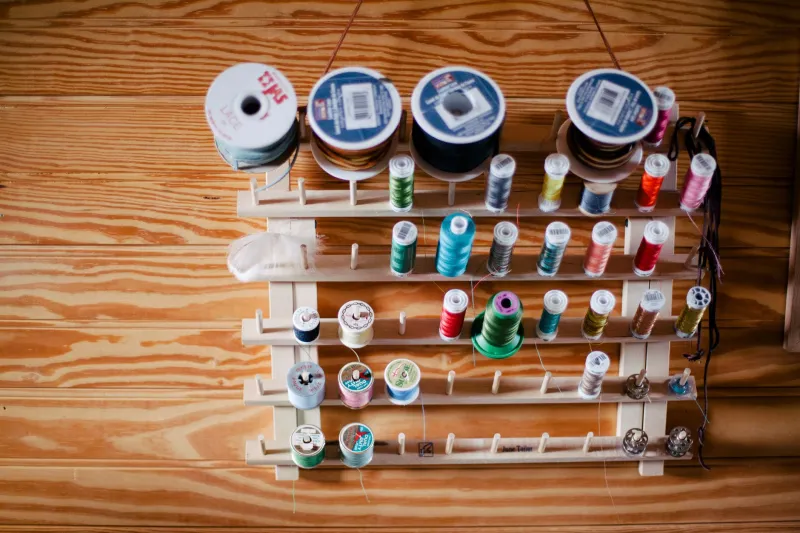
Before you start pulling things out and reorganizing, do a complete inventory pass. Pull everything — and we mean everything — out of wherever it lives and put it in one place. Yes, that includes the emergency sewing kit in your purse and the random skein you tossed in the junk drawer.
This step matters because most crafters dramatically underestimate how much they own. When you can see it all at once, you stop making duplicate purchases (guilty), you stop buying "just in case" colors you already have, and you start making decisions from a place of actual information rather than vague memory.
Snap a few photos before you dig in. You'll want the before-and-after comparison later — and honestly, it's useful to reference when you're shopping online at midnight and convince yourself you're out of warm neutrals.
The Honest Thread Test
Thread is where most stashes quietly go to die. Here's what to check for:
Color fading. If a skein has been sitting near a window or under fluorescent lighting for years, the color may have shifted. Hold it next to a fresh skein of the same color family and compare. Faded thread doesn't always look bad, but it will look inconsistent if you mix it with newer stock in the same project.
Brittleness and breakage. Give a length of thread a gentle tug. Quality thread should have some elasticity. If it snaps under minimal tension or feels dry and almost papery, it's degraded. This is especially common with older silk threads or anything stored in very dry conditions. Degraded thread will break constantly while you work and cause tension issues that'll make you want to throw your hoop across the room.
Tangling and matting. Some threads — particularly loosely twisted varieties — will mat together after years of storage. If you can't unwind a skein cleanly, it's not worth the frustration. Set it aside for a different use (more on that in a moment).
Mystery skeins. If you can't identify the brand, fiber content, or color number, it goes in the "use it or lose it" pile. Mystery thread is fine for practice samplers and low-stakes projects. It should not be your go-to for a piece you're planning to keep or gift.
Fabric: More Fragile Than You Think
Fabric stashes have their own failure modes. The biggest culprit? Yellowing. Natural fibers like linen and cotton will yellow over time, especially if stored in plastic bins without acid-free protection. A light yellow can sometimes be corrected with a gentle wash, but deep discoloration usually isn't worth the effort for a piece you'd want to display.
Also check for:
- Musty smell. If fabric smells damp or mildewy, inspect it closely for mold or mildew spots. These are not salvageable for embroidery projects.
- Fabric weave distortion. Linen especially can warp if stored folded under pressure for a long time. Try pressing it — if it relaxes back to flat, you're fine. If the distortion is structural, it'll affect your stitch evenness.
- Size. Be honest about whether that 6-inch square of fancy hand-dyed fabric actually has a project waiting for it, or if it's just too small to be useful. Small scraps can be incorporated into sampler grids or used for ornament backs.
The Notions Drawer: Purge Without Mercy
Notions — needles, hoops, scissors, stabilizers, marking tools — tend to accumulate in ways that feel harmless until you're digging through forty half-used transfer pencils looking for your embroidery scissors.
Needles dull over time and also rust in humid conditions. If a needle drags slightly through fabric rather than gliding, retire it. They're cheap. There's no reason to fight a bad needle.
Hoops and frames are worth keeping if they're functional, but check the hardware on scroll frames and the tension on wooden hoops. A hoop that doesn't hold fabric taut is worse than useless — it'll actively sabotage your work.
Stabilizers and interfacings have shelf lives, particularly the fusible varieties. If the adhesive has dried out, it won't bond properly and you'll end up with bubbling and lifting mid-project.
Giving Your Supplies a Second Life
Not everything that fails your audit needs to go in the trash. Here are some smart redirects:
- Degraded thread makes excellent practice material for testing new stitches before you commit to good thread on a real project. It's also great for basting.
- Yellowed or oddly colored fabric can work beautifully as a background for naturally rustic or vintage-aesthetic pieces. Lean into it intentionally.
- Partial skeins in odd colors can be donated to school art programs, community centers, or local craft swaps. Many makers are happy to take "grab bag" thread lots.
- Worn-out hoops can be repurposed as display frames for finished pieces, especially smaller ones.
Building Smarter Habits Going Forward
The whole point of an audit isn't just the purge — it's the recalibration. Once you know what you actually have and what you actually use, you can start purchasing more intentionally.
A few practical shifts that help:
Buy for the project, not the possibility. It's tempting to stock up on a beautiful colorway "for someday," but someday projects rarely materialize. Buy thread when you have a specific design in mind.
Keep a running stash list. Even a simple note on your phone with your thread brands and color numbers prevents duplicate purchases. Some crafters use spreadsheets; others use apps like Ravelry (yes, it works for embroidery too). Find what you'll actually maintain.
Rotate your stash. When you start a new project, pull from your existing materials first before buying anything new. You might be surprised how often your stash already has exactly what you need.
A stash audit isn't a punishment — it's an act of respect for your craft. When you know what you have, you work with more intention, less clutter, and a lot more creative confidence. And honestly? There's something deeply satisfying about finishing a project knowing it came entirely from materials you already owned and chose with purpose.