Beautiful Work, Empty Cart: What's Actually Stopping Your Embroidery From Selling
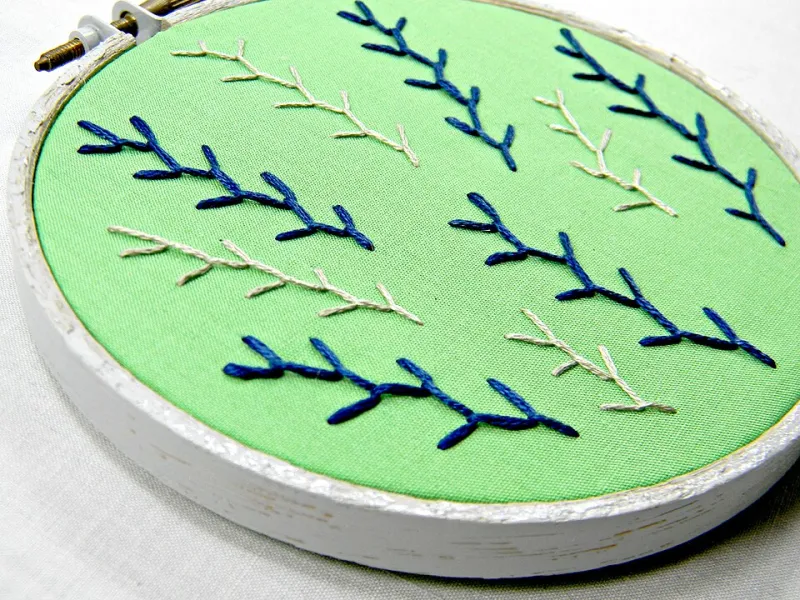
Photo: Hey Paul Studios from Kansas City, MO, United States, CC BY 2.0, via Wikimedia Commons
You finished the piece. You photographed it, listed it, and waited. Nothing. Maybe a few favorites on Etsy, a handful of likes on Instagram, but no actual sales. If this sounds familiar, you're not alone — and the problem almost certainly isn't your stitching.
The hard truth is that selling handmade embroidery involves a completely different skill set than making it. The gap between a beautiful hoop and a sold-out shop is mostly about presentation, pricing, and platform — not talent. Let's break down exactly where things go sideways, and what you can do about it.
Your Pricing Is Either Scaring People Off or Underselling You
Pricing handmade work is genuinely one of the hardest parts of running a craft business, and most embroiderers get it wrong in one of two directions.
Underpricing is the more common trap. When you calculate your hours honestly — and embroidery hours add up fast — and then charge less than minimum wage to seem competitive, you're not just hurting yourself. You're also signaling to buyers that the work isn't worth much. Counterintuitively, a $28 hoop often gets fewer sales than the same piece priced at $65, because buyers associate price with quality and craft legitimacy.
The formula most selling embroiderers use looks something like this: materials cost multiplied by three, plus your hourly rate for the actual stitching time, plus a small buffer for packaging and platform fees. That number might feel scary at first. Post it anyway.
On the other end, pricing without context doesn't work either. If you're charging $200 for a piece and your listing doesn't explain the complexity, the hours, or the materials — buyers have no framework for understanding the value. Price tags need storytelling to land.
Your Photos Are the Real Problem (Probably)
This is the one most makers resist hearing, but it's almost always true: your photos are doing more damage than anything else.
Embroidery is tactile, dimensional, and intricate. A flat overhead shot on a white background communicates almost none of that. It looks like clip art. Buyers can't feel the texture through a screen, so your photos have to do that work for them.
Here's what actually moves embroidery on platforms like Etsy and Instagram in today's market:
Lifestyle context. A framed hoop on a gallery wall, a jacket hanging in a sunlit doorway, a tote bag sitting on a café table — these images help buyers picture the piece in their actual life. That mental leap from "this is pretty" to "I want this in my home" is what converts browsers into buyers.
Close-up texture shots. Get in close enough that buyers can see individual stitches, the sheen of the thread, the way the fabric catches light. This is your proof of craft. Don't skip it.
Natural light, always. Overhead fluorescent light or a ring light aimed straight at your work flattens everything. Move to a window. Soft, indirect daylight is free and it makes embroidery look genuinely beautiful.
Consistent visual style. If your shop looks like five different photographers shot it, buyers lose trust. Pick a background palette, a shooting style, and stick with it.
You don't need a professional camera. A modern smartphone with good lighting and a steady hand will absolutely get the job done.
You're Probably on the Wrong Platform (Or Treating the Right One Wrong)
Not every platform works equally well for every type of embroidery, and spreading yourself thin across all of them usually means doing none of them well.
Etsy is still the strongest marketplace for finished embroidery pieces in the US. Buyers come there specifically to find handmade goods, and the search intent is purchase-ready. But Etsy rewards listings that are actively maintained — updated photos, refreshed descriptions, competitive shipping policies. A listing you set up two years ago and forgot about is basically invisible.
Instagram and TikTok are discovery engines, not storefronts. They're excellent for building an audience and driving people toward your shop, but they rarely convert directly. If you're posting process videos and finished work without a clear link to where people can buy, you're doing free advertising with no payoff.
Local markets and pop-ups are dramatically underrated. Craft fairs, farmers markets, and local boutique pop-ups in your city give buyers the chance to touch the work, which is enormous for embroidery sales. The conversion rate at in-person events is almost always higher than online, and you get immediate feedback on what's resonating.
Your Listings Are Missing the Story
Buyers on Etsy and similar platforms aren't just buying a product — they're buying a narrative. They want to know who made it, why, and what makes it special. A listing that says "hand embroidered hoop, 6 inches, floral design" is leaving most of that value on the table.
Try describing the piece the way you'd tell a friend about it. What inspired the design? What thread did you use and why? How many hours did it take? Is it a limited run or one-of-a-kind? What room or outfit would it look best in?
This isn't fluff — it's sales copy that helps buyers justify the purchase to themselves. Handmade items often cost more than mass-produced alternatives, and buyers need a compelling reason to choose yours. Your story is that reason.
Packaging Is Part of the Product
If someone does buy your work and it arrives in a plastic poly mailer with no tissue paper, no card, and no acknowledgment that a human being made it — you've lost them as a repeat customer.
The unboxing moment is a real part of the customer experience, and for embroidery specifically, it matters a lot. Your buyers are likely gift-givers or collectors who care about presentation. A simple kraft box, some tissue paper in a coordinating color, a handwritten thank-you note, and a small card with care instructions costs maybe $1.50 extra per order. The impact on reviews, repeat business, and word-of-mouth is significant.
You don't need to go overboard. Clean, thoughtful, and personal beats elaborate every time.
The Honest Reset
If your embroidery isn't selling, the work itself is rarely the issue. Go back through this list and be honest about where you've been cutting corners — because most of us cut corners somewhere. Maybe your photos are serviceable but not compelling. Maybe your prices feel right to you but haven't been road-tested. Maybe your Etsy shop looks abandoned because you haven't touched it in eight months.
Pick one thing to fix this week. Reshoot three listings with better light. Rewrite two product descriptions with more story. Raise your prices on your most labor-intensive pieces and see what happens.
Your stitching is already good. The rest is learnable.